Three Distinct Gum Arabic Products
Defined by species, differentiated by function. From premium beverage emulsifiers to cost-effective industrial binders and prebiotic dietary fibre.
Every product is sourced from Kenya's ASAL counties, processed at our Athi River EPZ facility, and shipped with a full Certificate of Analysis and tree-to-container traceability.



What is Gum Arabic?
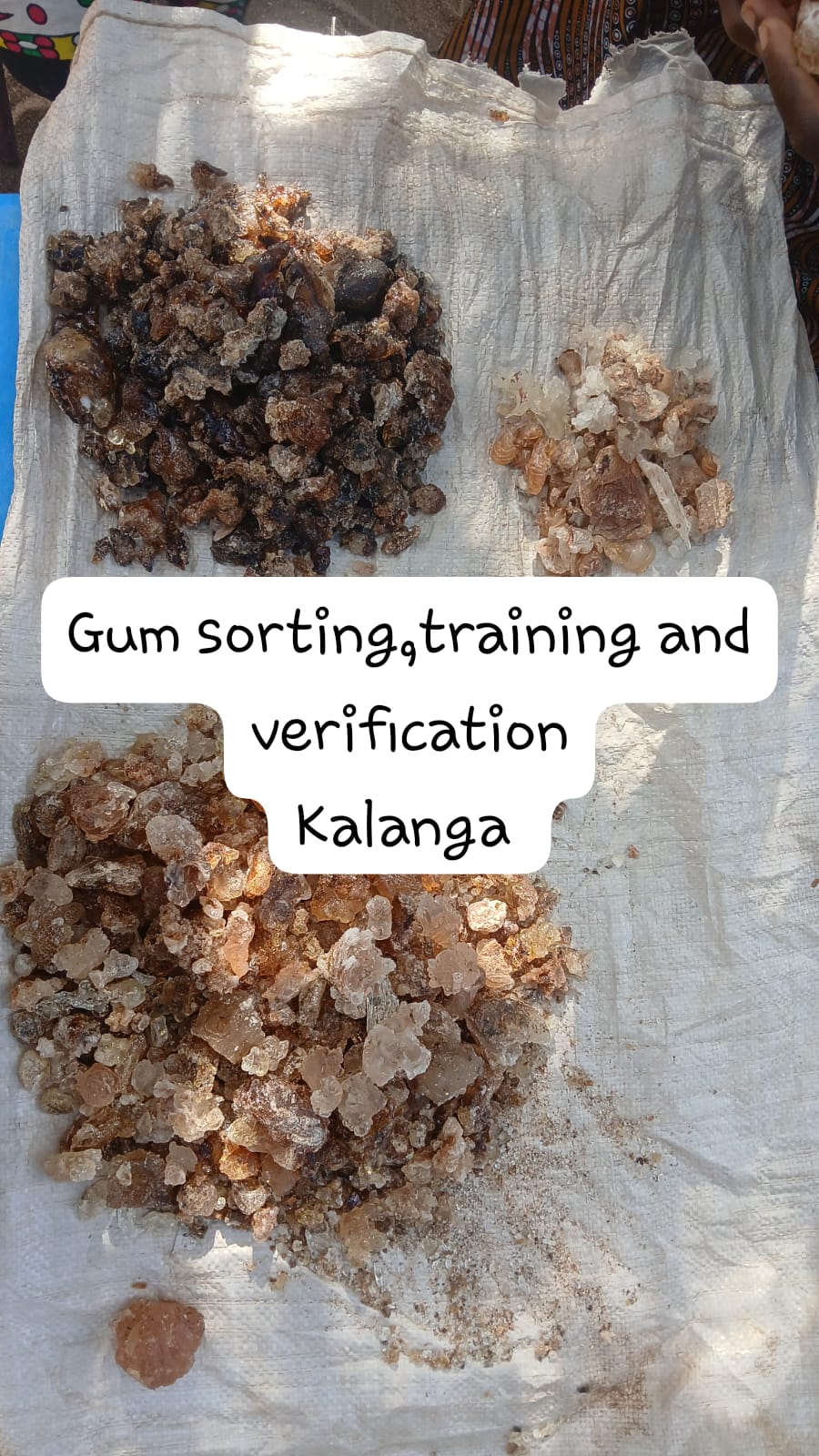
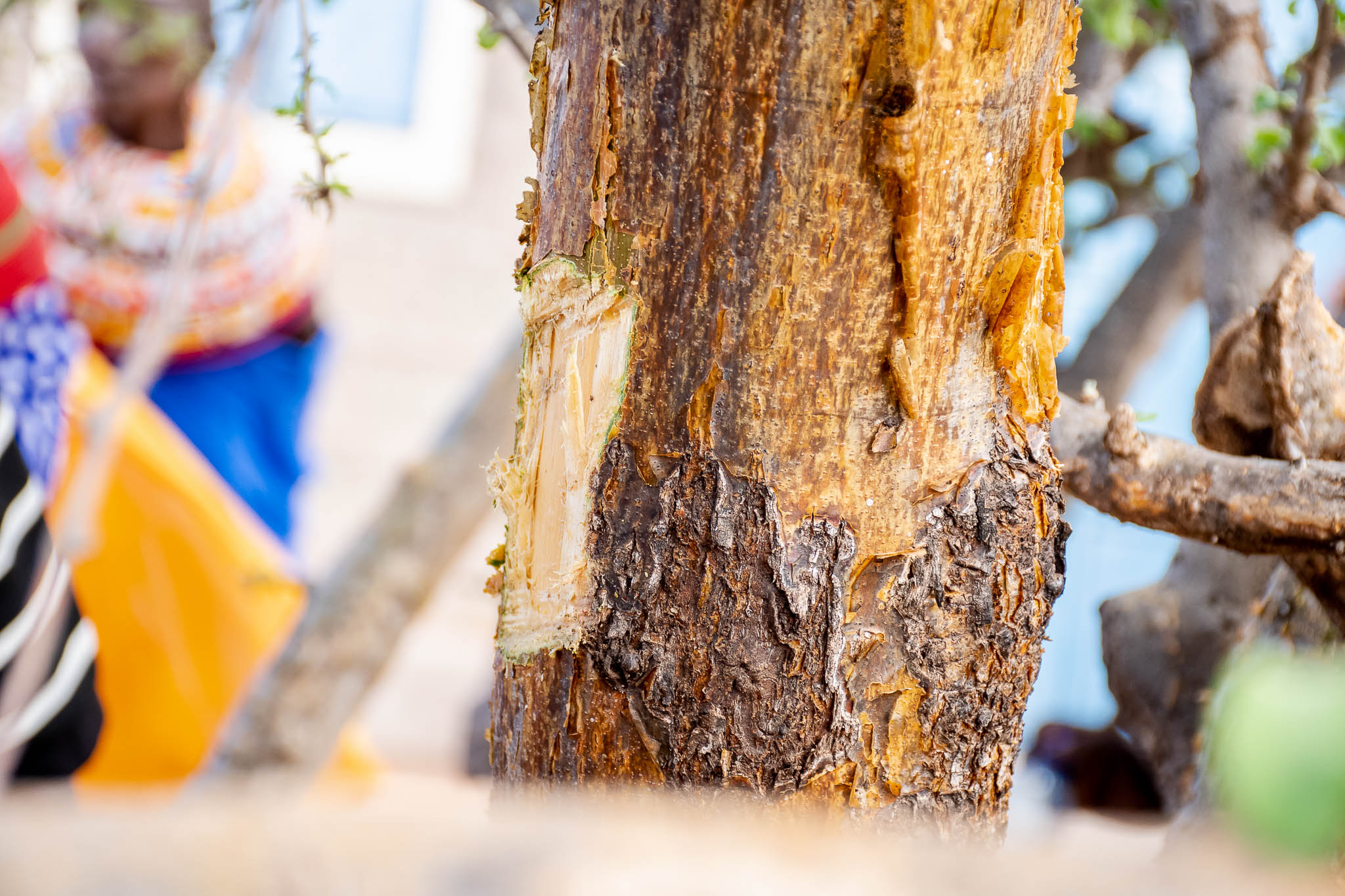
Gum Arabic (E414 / INS 414) is a natural plant exudate harvested from acacia trees. It is one of the oldest and most versatile hydrocolloids known to food science — a premium emulsifier, stabiliser, binder, and soluble dietary fibre used across food, pharmaceutical, cosmetics, and industrial applications.
Kenya's Acacia senegal var. kerensis produces gum renowned for the highest viscosity of any commercial variety, while A. seyal (Talha) is increasingly valued as a prebiotic dietary fibre with clinical evidence for gut health benefits.
Three Species. Three Market Positions.
Each product is botanically authenticated via specific rotation analysis and shipped with a full Certificate of Analysis referencing JECFA, EU, and FDA specifications.
Acacia senegal var. kerensis
Kenya's premium origin — superior viscosity for demanding formulations
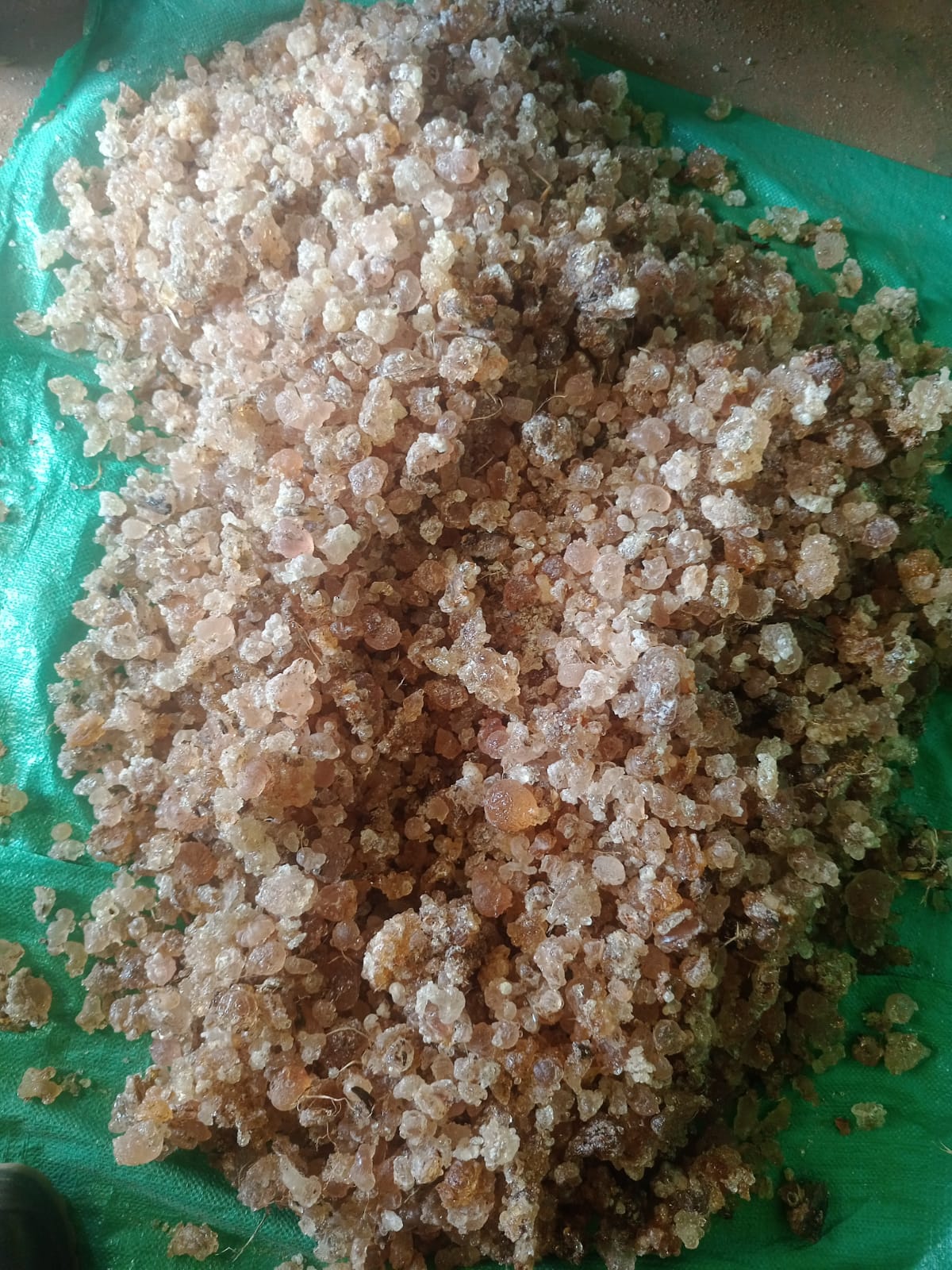
The flagship Kenyan gum arabic — pale yellow to amber translucent nodules distinguished by the highest molecular weight and absolute viscosity of any commercially available Acacia senegal variety. Published research confirms var. kerensis delivers superior stabilisation in oil-in-water emulsions and dairy systems, making it the grade of choice for beverage and confectionery manufacturers worldwide.
Note: Kenya is the only significant commercial source of var. kerensis globally, giving this product a unique origin-based value proposition.
Physical Specifications
Chemical & Physicochemical
Applications & Usage Levels
Citrus oil emulsification in soft drinks, cloud agents, wine fining
Binding, glazing, coating, volume enhancement
Spray-dry wall material for flavours and fragrances
Soluble prebiotic fibre supplement (≥ 85 % TDF)
Acacia senegal var. senegal
Kordofan-equivalent quality — the international benchmark grade
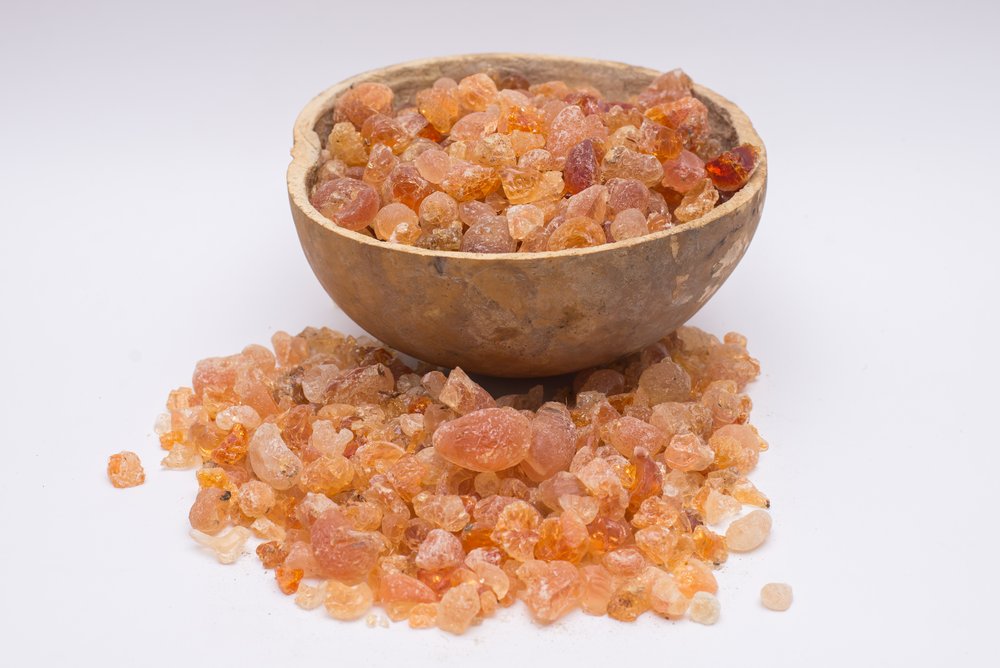
The same botanical variety that produces the world-renowned Kordofan grade from Sudan — now sourced from select Kenyan belts in Isiolo, Marsabit, and Garissa counties. These near-white, glass-clear "tears" meet or exceed Kordofan reference specifications across every JECFA parameter, making them fully interchangeable in all formulations where var. senegal is specified.
Note: Fully interchangeable with Sudanese Kordofan Hashaab in all formulations where var. senegal is specified.
Physical Specifications
Chemical & Physicochemical
Applications & Usage Levels
Emulsifier, stabiliser, and cloud agent
Glazing, binding, and coating — benchmark quality
Tablet binder, suspending agent, excipient
Micro-encapsulation wall material for flavours and fragrances
Acacia seyal
Versatile & cost-effective — from dietary fibre to industrial binder
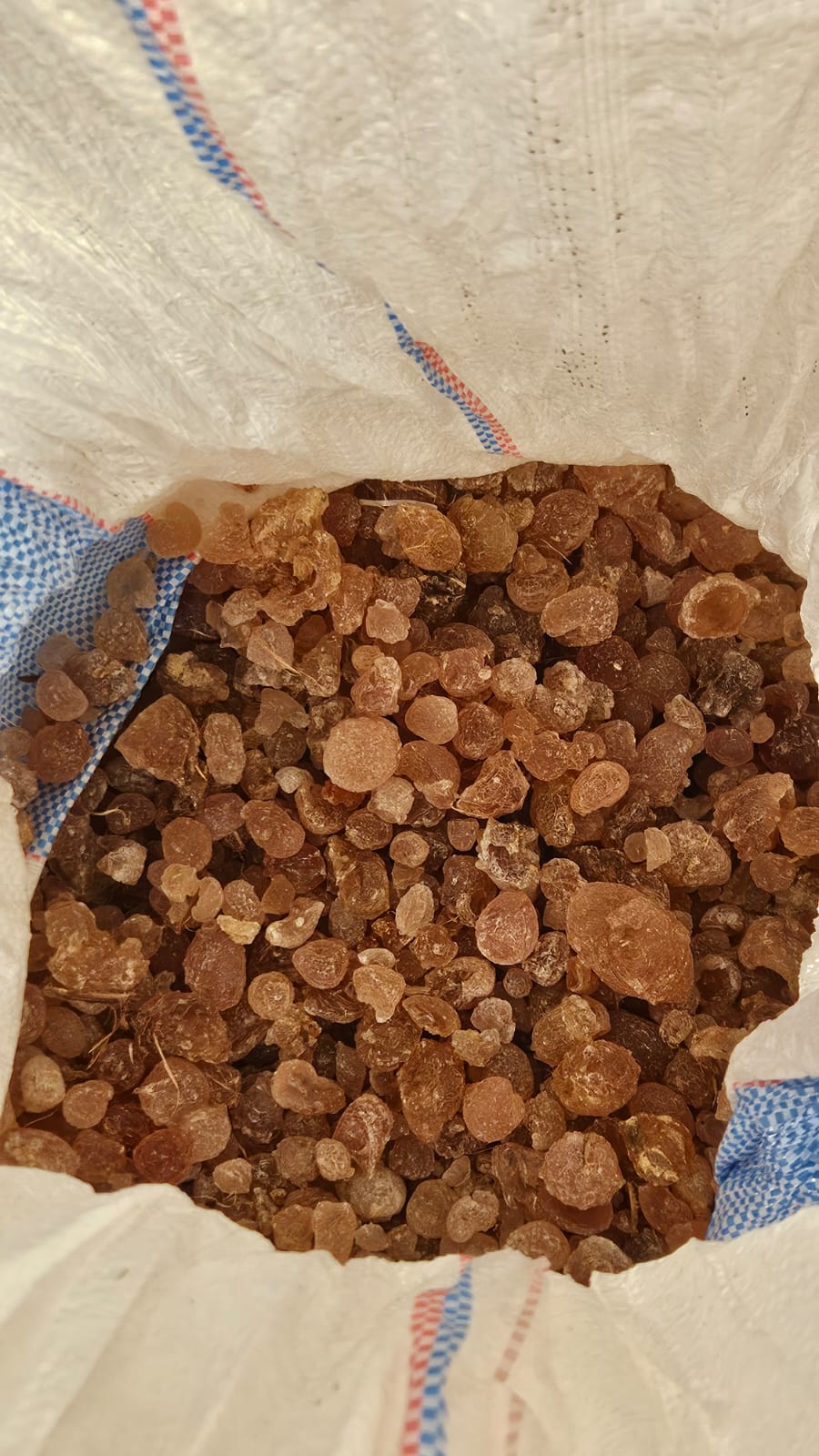
A functionally distinct species with dextrorotatory optical rotation, higher molecular weight, and lower protein content. Talha gum is increasingly valued in the nutraceutical sector as a prebiotic dietary fibre with published clinical evidence for gut health benefits, while its cost-effectiveness makes it the preferred choice for industrial applications.
Note: Under EU/JECFA definitions, both A. senegal and A. seyal gums are accepted as "gum arabic" (E414). Full botanical identification is provided on every Certificate of Analysis.
Physical Specifications
Chemical & Physicochemical
Applications & Usage Levels
Soluble prebiotic fibre supplement — published clinical evidence for gut health
Plate sensitiser, ink binder, and paper coating
Sizing agent, deflocculant, binder for technical applications
Film-former, peel-off masks, emulsion stabiliser
Side-by-Side Specifications
Quick reference for procurement and formulation teams. Full technical data sheets available on request.
| Parameter | var. kerensis | var. senegal (Hashaab) | A. seyal (Talha) |
|---|---|---|---|
| Colour | Pale yellow to amber | White to pale yellow | Dark amber to brown |
| Optical Rotation | −26° to −34° (laevo.) | −26° to −34° (laevo.) | +35° to +60° (dextro.) |
| Nitrogen | 0.27 – 0.39 % | 0.27 – 0.39 % | 0.06 – 0.24 % |
| Protein (N×6.60) | 1.7 – 2.6 % | 1.8 – 2.4 % | 0.4 – 1.5 % |
| Viscosity (25 % w/w) | > 60 mPa·s | > 50 mPa·s | > 30 mPa·s |
| Tannin | Absent | Absent | Present |
| L-Rhamnose | 11 – 16 % | 12 – 16 % | < 4 % |
| Dietary Fibre | ≥ 85 % | ≥ 85 % | ≥ 80 % |
| Price Positioning | Premium | Premium (benchmark) | Value / mid-range |
| Primary Market | Beverages, dairy, emulsions | Confectionery, pharma, encapsulation | Industrial, fibre, cosmetics |
Where Our Gum Arabic Works
Gum Arabic is one of the most versatile natural hydrocolloids — serving industries from beverage manufacturing to lithographic printing.

Beverage Manufacturing
Kerensis and Hashaab grade gum arabic is the industry standard for citrus oil emulsification in carbonated and still beverages.

Pharmaceutical Manufacturing
Hashaab grade serves as a tablet binder, film-coat excipient, and controlled-release agent in oral dosage formulations.

Lithography & Printing
Talha grade gum arabic is the traditional sensitiser for lithographic printing plates, keeping non-image areas clean during offset printing.

Cosmetics & Personal Care
Talha and Hashaab grades provide natural film-forming, emulsion-stabilising, and thickening properties for premium skincare and hair products.
Global Gum Arabic Market by Sector
Annual global demand exceeds 120,000 MT · Market valued at over US $1.2 billion
Food & Beverage
Emulsifier and stabiliser for soft drinks, confectionery, dairy, bakery, and flavour encapsulation.
Pharmaceuticals
Tablet binder, film-coat excipient, capsule modifier, and controlled-release formulations.
Cosmetics
Film-forming agent, emulsion stabiliser, and natural thickener for skin and hair care.
Industrial
Lithographic printing, textile sizing, paper coating, adhesives, and ceramic glazing.
Regulatory & Certification Status
All three products comply with the world's major food-safety and trade regulations.
JECFA (FAO/WHO)
CompliantINS 414 — ADI "not specified"
EU Food Additive E414
CompliantRegulation (EC) 1333/2008
US FDA GRAS
Compliant21 CFR 184.1330
Halal
CompliantNatural plant exudate
Kosher
CompliantInherently Kosher
Vegan / Vegetarian
Confirmed100 % plant-derived
Non-GMO
ConfirmedWild harvested from natural stands
Allergen-Free
ConfirmedFree from all 14 EU-listed allergens
KEPHIS Phytosanitary
Per ShipmentCertificate per export consignment
Every Batch Tested. Every Shipment Certified.
Our quality control laboratory at Athi River employs viscometers, colorimeters, moisture analysers, pH meters, and microbiological testing suites to verify every production lot against JECFA / EU / FDA specifications.
Routine & Export Testing Protocols
Shipment Documentation
Every consignment ships with: Certificate of Analysis (CoA) · Certificate of Origin · Phytosanitary Certificate · Movement Permits · Fumigation Certificate · Packing List · Traceability Report (collector → container).
Request Full Technical Data Sheet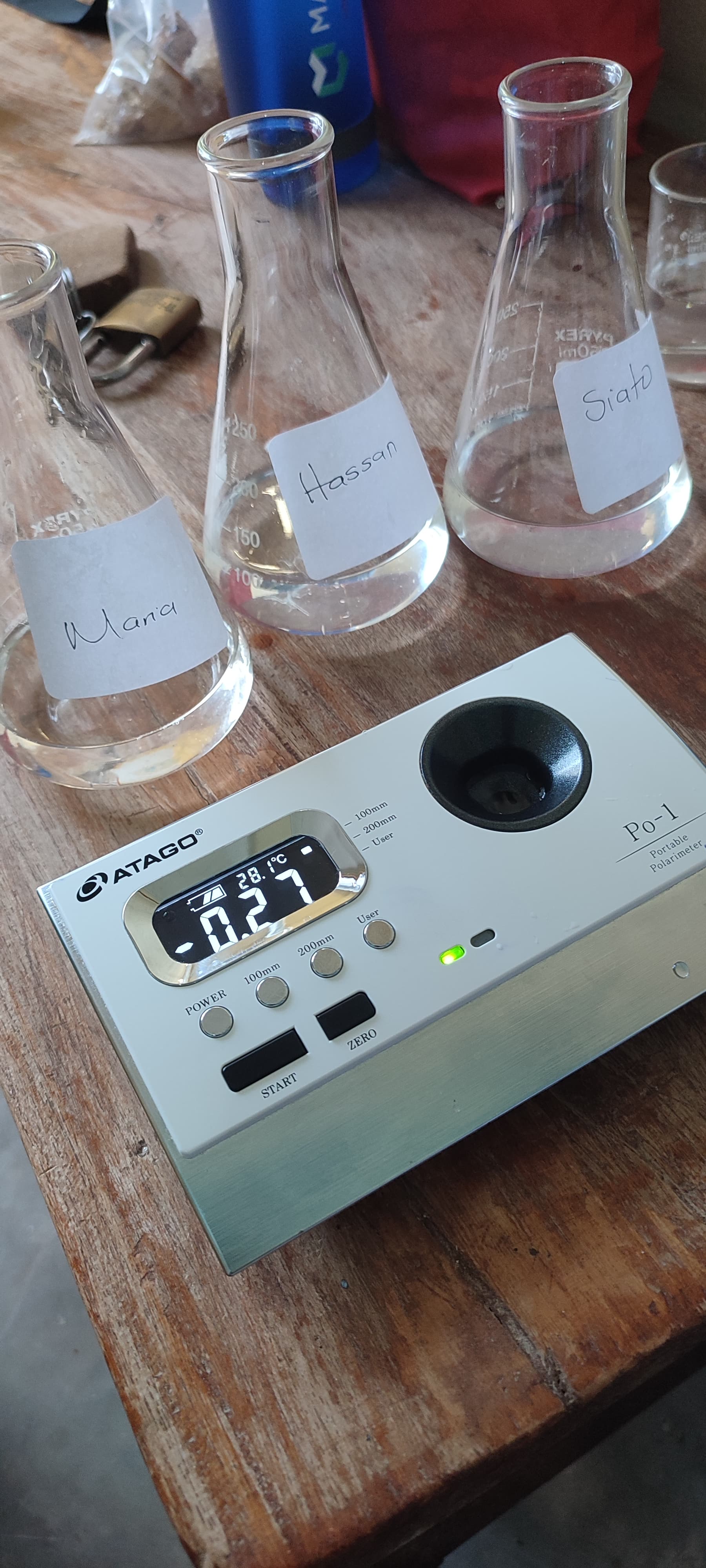
Export-Ready Packaging
Standard and custom packaging options for every order size. All materials are food-grade with moisture-proof liners.
Kraft Paper Bags
Multi-wall kraft with PE inner liner — standard export
PP Bags
Food-grade polypropylene with PE liner — bulk export
FIBC / Big Bags
Food-grade PP with PE liner and lift loops — industrial
Custom Packaging
Per client specification — available on request
Storage
Below 25 °C · 45–50 % RH · away from sunlight
Shelf Life
HPS & Kibbled: 36 months · Powder: 24 months
Shipping
FOB Mombasa · CIF · Ex-Works Athi River EPZ
Sourced from 9+ ASAL Counties
Every kilogram is traceable to its collection point, collector, and date of harvest via our digital field verification system.
Select a County
Click on any highlighted county on the map to view detailed information about our operations there.
Ready to Source?
Contact us for full technical data sheets, samples, certificates of analysis, and pricing across all three products. We offer consistent supply with complete batch traceability.